
Soccer
Top of the Table, Guilty on 114 Counts: Inside the Manchester City Ruling and What Comes Next
Oct 6, 2026 · By Alex Charles
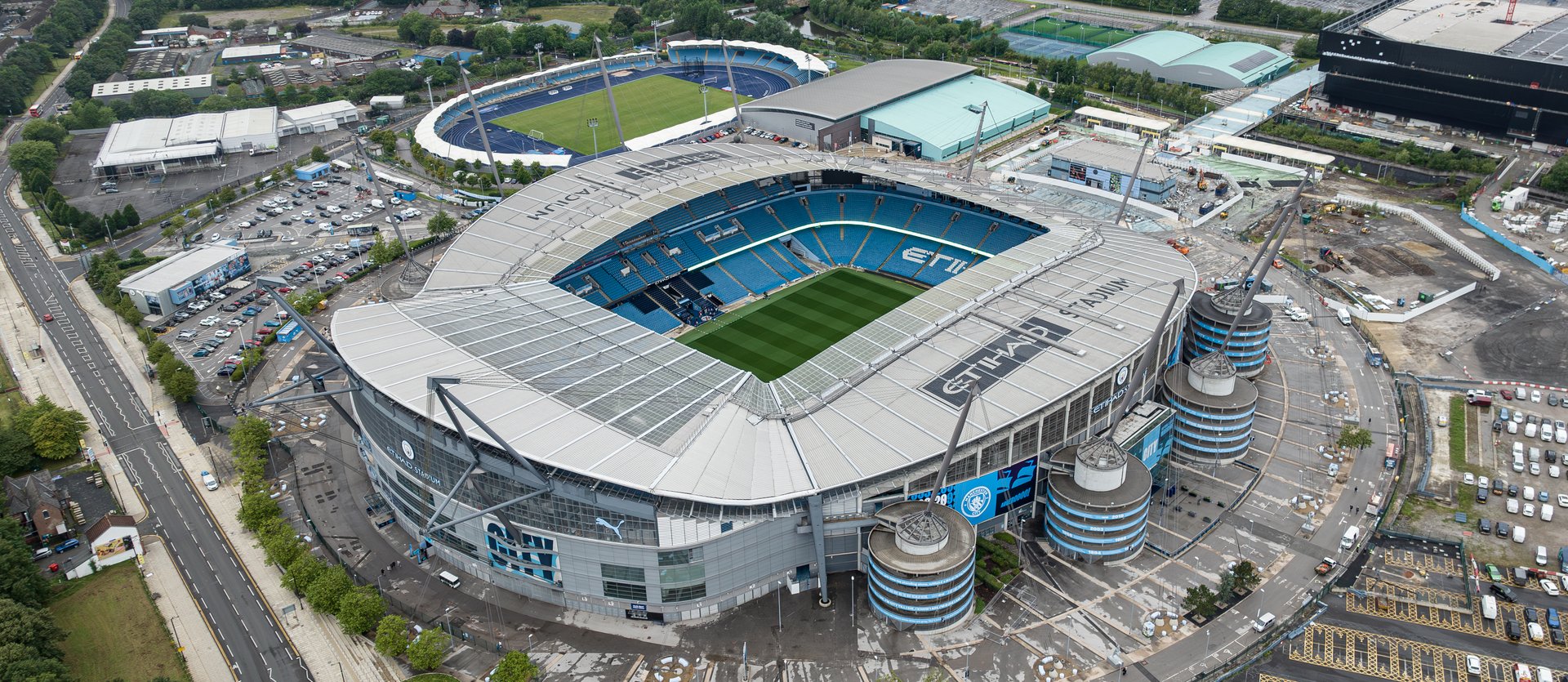
On the afternoon of Tuesday, September 29, the Premier League published a document it calls the Core Decision: 40 redacted pages from the three-person commission that spent 42 days in the autumn of 2024 hearing the league's case against Manchester City. The conclusion fits in a sentence. Of the charges filed in February 2023, usually counted as 115, City were found to have committed every one except a single count of failing to cooperate with the investigation.
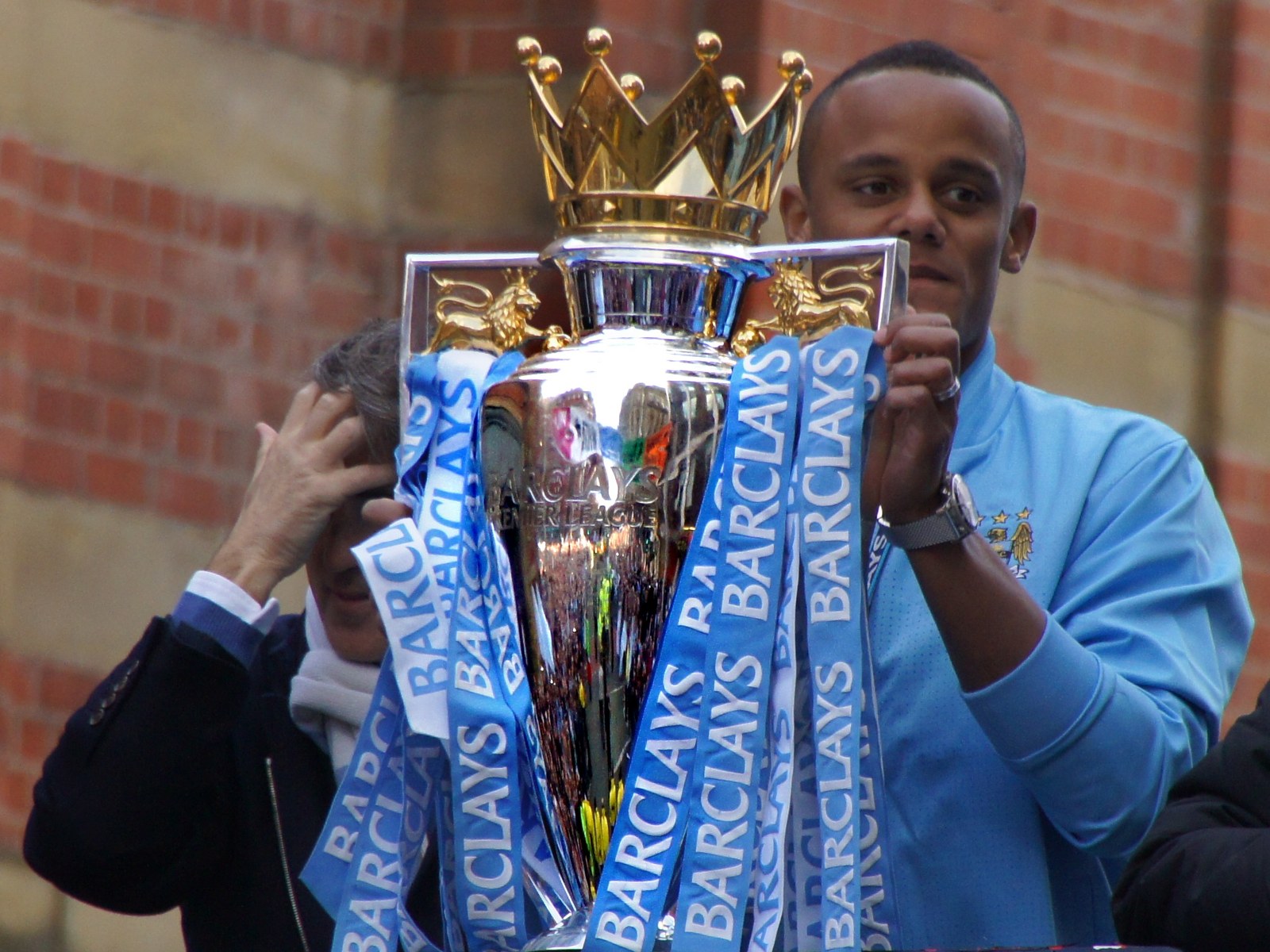
Then there is the league table. City have won six of the last nine Premier League titles. They have played five matches this season and won all five, which puts them on 15 points, three clear of Arsenal, with a trip to Anfield on October 11. The body that has just found them guilty has the power, written into the league's own rules, to deduct enough points to send them down, or to remove them from the competition altogether. No sanction has been set. City lodged their appeal at 7 p.m. on Thursday, a day before the deadline. What follows is an attempt to lay out, without the noise, what the commission found, how the process works from here, and what the realistic range of outcomes looks like.
Eight years, 42 hearing days, 7,000 pages of transcript
The case begins with a hack. In November 2018, Der Spiegel published a series of stories built on internal City emails obtained by the Portuguese whistleblower Rui Pinto, alleging that the club's Abu Dhabi owners had been quietly topping up sponsorship deals to satisfy UEFA's financial fair play rules. UEFA moved first. In February 2020 it banned City from European competition for two seasons and fined them 30 million euros; five months later the Court of Arbitration for Sport threw most of that out, finding the bulk of the alleged breaches either time-barred or not established, and cut the fine to 10 million. City treated it as vindication.
The Premier League, whose rules carry no equivalent time limit, kept going. Its investigation opened in December 2018 and ran for more than four years. In February 2023 it referred City to an independent commission on four broad categories of charge: that the club's accounts from 2009-10 through 2017-18 did not give a true and fair view of its finances, including payments to a manager and players kept off the books; that it breached UEFA's rules from 2013-14 to 2017-18; that it breached the league's own profitability and sustainability rules from 2015-16 to 2017-18; and that it obstructed the investigation itself. City denied all of it.
The hearing ran from September 16 to December 6, 2024, with Bird & Bird acting for the league and Clifford Chance for the club. The commission's own description of it explains the silence that followed. Twenty-seven witnesses of fact gave evidence in person; City alone put forward 24. The transcripts ran to roughly 7,000 pages. The index to the hearing bundle was 750 pages on its own, and the parties cited more than 300 legal authorities. "No stone was left unturned," the panel wrote. Then, for 21 months, nothing. The apology is in paragraph 18 of the decision: "It has taken us much longer than we would have wished, and much longer than we had anticipated would be the case when the hearing concluded, to produce our Decision. That is regrettable."
What the commission says happened
The story the ruling tells starts in the autumn of 2009, a year after Sheikh Mansour's Abu Dhabi United Group bought the club. City's own documents, the panel found, showed a loss coming in 2009-10 that would beat the largest any Premier League club had ever posted, Chelsea's 140 million pounds in 2006. "That was a record that the Club was adamant it should not break," the decision says. The owners also expected heavy losses for at least five more years, just as UEFA was drafting rules that would judge clubs on whether their income covered their spending. Money an owner puts in as equity does not count as income under those rules. Sponsorship does.
So, in early 2010, according to the commission, the club built what the ruling calls the Disguised Funding Scheme. City signed sponsorship agreements with Abu Dhabi-linked companies at recorded values far above what the rights were worth. Each fee was split in two. The sponsor paid a "Base Sum." The owners, through ADUG, paid the rest, the "Tagged Sum." The club booked the whole amount as commercial revenue. Across the nine seasons from 2009-10 to 2017-18, City recorded 949.94 million pounds in income from those sponsors. The commission found that 119.25 million of it was actually paid by the sponsors. The remaining 830.69 million pounds came from the owners.
The ruling describes side documents, produced by or on the instruction of people whose names are redacted, whose purpose was to reassure sponsors that their real liability would never exceed the base fee, and to conceal the arrangement from "regulators and auditors should the need arise." The scheme was adjusted over the years, the panel wrote, to "assist with continued concealment" and "reduce the likelihood of difficult questions being asked." One episode stands out. In May 2013, less than a week before the end of the financial year, the club realized it was 9.9 million pounds short of UEFA's break-even requirement. Within days, without the sponsors being approached, a set of amended agreements appeared that raised the recorded fees to cover bonuses for events that had already happened and the cost of a U.S. tour. The gap closed.
Two other strands run alongside. In 2012 the club launched Project Longbow, which the commission accepted was mostly a legitimate effort to grow revenue. One part of it was not: a deal with an entity called Fordham, described in the ruling as "little more than a front," which bought the club's players' image rights at an inflated price using money that came from ADUG. That let City record 24.5 million pounds as operating income and leave 49.4 million of image-rights payments out of its expenses. Separately, the panel found three arrangements, all names redacted, under which the owners paid a manager and players money the club owed them, off the club's books, one of them written up as a consultancy agreement. Those came to 8.866 million, 7.4 million and 500,000 pounds. Add everything together and the commission's figure for how far City's accounts sat from the truth over nine seasons is 920.68 million pounds.
The language about the people involved is the part of the document lawyers keep returning to. The commission found that evidence from "a number of important factual witnesses" called by City "was false in a number of key respects," and that some of them "had given evidence at the hearing that they knew to be untrue and so had been dishonest." It rejected the club's explanation of the sponsorship deals as "untrue" and "concocted well after the event." It found the club knew its accounts "did not provide a true and fair view" of its position, or was reckless about whether they did. On the fourth charge it found City "made concerted efforts to stop and frustrate the PL investigation." The one count that failed, Charge 4(B), was a single limb of that non-cooperation case.
By its conduct the Club clearly intended to circumvent the PL Rules.
City's answer
City's response came the same afternoon. The club said it was "both disappointed and surprised by the opinion of the Premier League Commission," that it is "innocent of the accusations," and that "a comprehensive body of irrefutable evidence exists in support of all of its positions." It promised to be "relentless, and where necessary proactive, in any and all appropriate regulatory and legal forums," and said the ruling "contains clear material errors, of law, principle and fact, and is unsafe." There was a pointed line about having "diligently respected due process for eight years on the basis that the Premier League Board and Executive would behave as an independent, impartial and fair-minded regulator, free from partisan influence." In a video message to staff obtained by Sky Sports, chief executive Ferran Soriano called the case a "Premier League conspiracy theory."
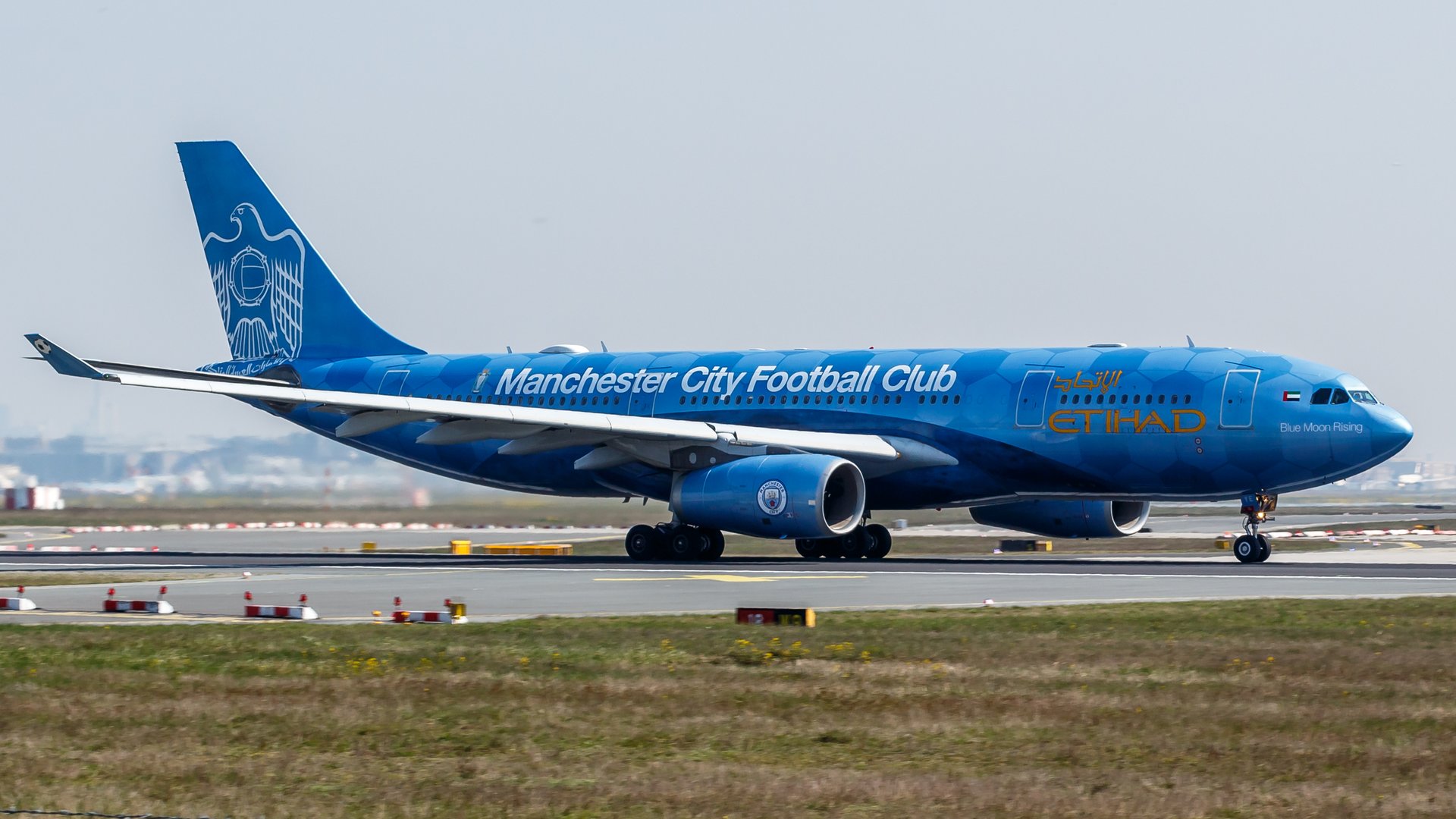
The appeal went in on Thursday evening. The BBC and others have reported the core of the argument City intend to make: that the top-up money for the sponsorships came not from the club's owners but from the government of Abu Dhabi, and that Premier League rules permit state-owned bodies to sponsor clubs. It is a real legal distinction, and it has a problem that predates the case. In 2015, responding to a U.S. government inquiry into subsidies at state-owned airlines, Etihad told the Departments of Commerce, Transportation and State that "the assertion that the Abu Dhabi government paid for Etihad's sponsorship of English Premier League football club Manchester City is false," and that it "funded this sponsorship from its own liquidity." Etihad has since said it is weighing legal action against the league over the "damaging implications" of the ruling's publication.
Pep Guardiola, who left in May after ten years, six league titles and 20 trophies, posted that he was "behind my club, my owner, my chairman, Ferran, the players, staff, Enzo [Maresca] and you, our unique supporters," and that "we will get through this together." The current squad, under Maresca, has simply kept winning.
How the appeal works, and how long it takes
The appeal is not a second trial. Under Section W of the Premier League's rules it goes to an Appeal Board of three, chosen by the chair of the league's independent Judicial Panel, Sir Gary Hickinbottom, a former Court of Appeal judge; one member must have held judicial office and will chair. The board reviews the commission's decision rather than rehearing the evidence, and City will need grounds: an error of law, a misreading of the facts, a conclusion no reasonable panel could have reached, or a procedural failure serious enough to matter. New evidence is allowed only if it genuinely was not available the first time. "They've had so long to put the case together for these proceedings," Kyle Phillips, a partner at the London firm Howard Kennedy, told ESPN. "I expect it's all been presented and just been rejected." The board can dismiss the appeal, allow it, send the case back to the commission, or vary the outcome.
The timetable is new. A rule added to the handbook this summer says an appeal hearing should take place within 12 weeks of the appeal being lodged, run no more than five days, and produce a decision within 30 days of its conclusion. Twelve weeks from October 1 is December 24. Thirty days after a late-December hearing is the end of January 2027. The same rule allows the timetable to be set aside, and lawyers have told clubs to expect three to four months, according to the Telegraph, with the league hoping to have the whole matter resolved early in 2027. The same paper reports that the total legal bill could approach 100 million pounds, a cost that lands on the league's 20 member clubs.
Sanction runs on a separate track, and this is where the real uncertainty sits. Now that the charges are proved, the same commission will hold a private hearing on punishment. The league has described the ruling as a "final award" and said it is "committed to moving swiftly through the remainder of the process." Nothing in the rules prevents a sanction being imposed while the appeal is pending; Phillips compares it to a court proceeding to sentencing while a conviction is under appeal. In the league's smaller recent cases the sanction waited for the appeal, but there is no requirement that it does. Whatever is imposed, City can appeal that too. After the Appeal Board there is very little road left. Premier League clubs agree to settle disputes under English arbitration law, which rules out the Court of Arbitration for Sport that rescued City in 2020. A challenge in the High Court would require showing a serious irregularity, a tribunal exceeding its powers, or a hearing that was fundamentally unfair, and City have already argued, and lost, the point that the league had no jurisdiction to bring the charges at all.
What the punishment could be
Section W gives the commission a menu that runs from a reprimand through fines, points deductions and suspension to expulsion from the league, plus the power to make "any other order it thinks fit." There is no tariff, and nothing in the league's history is close in scale. The reference points are recent and modest. Everton were docked 10 points in November 2023 for exceeding the 105 million pound three-year loss limit by 19.5 million; an appeal board cut it to six, and a second breach cost them two more points the following spring. Nottingham Forest lost four points in March 2024 for a 34.5 million overspend, down from six because they pleaded early and cooperated. In March 2026, Chelsea accepted a 10.75 million pound fine, the largest in the league's history, and a suspended transfer ban for 47 million in undisclosed payments made during the Abramovich years. The fine would have been 20 million, the league said, but Chelsea's new owners had self-reported and cooperated, and the league was satisfied the club would have stayed inside the spending rules regardless.
Every one of those mitigating facts points the other way here. The commission found City in breach of the profitability and sustainability rules "by a very substantial amount" in each of the three seasons they applied, on top of nine years of misstated accounts and five of UEFA breaches, and it found the club actively obstructed the investigation. Kieran Maguire, the football finance academic, walked through the arithmetic on talkSPORT: the Everton and Forest cases established a starting point of about three points per breach plus roughly a point for every 6.5 million pounds over the limit, before any uplift for failing to cooperate. His estimate came out at 50 to 60 points if the findings survive appeal. A Premier League source gave the i Paper a similar range, and the Times has reported discussion among clubs of deductions spread across several seasons, with figures as high as 200 points mentioned. For scale, a Premier League season has 114 points in it. A 60-point deduction imposed tomorrow would leave City on minus 45 with 33 games to play, which is survivable on paper and not in practice. Above about 70, in Maguire's words, "they're effectively relegated."
Two things the commission cannot straightforwardly do are often discussed as if it could. It cannot relegate City; the Championship belongs to the English Football League, and the Premier League's only levers are points and expulsion. No club has ever been expelled from the English top flight, and doing it would leave the EFL to decide whether to admit City at all. The Times reports that some in the game would prefer it did not, while other clubs worry about what losing City would do to the league's value, and about reviving talk of a European Super League. Nor is stripping titles the likely route. The "any other order" clause has fed the speculation, but Daniel Gore, a disputes partner at Withers, told the i Paper that removing honours is "highly unlikely where there is already precedent for points sanctions," and the commission's job is the breaches, not the record books. On one point the Telegraph's reporting is clear: the same commission decides, the league may make recommendations, and the other 19 clubs have no say.
The bills that come after
Whatever the commission decides, the next phase is civil litigation, and it has already started. A year ago Arsenal, Tottenham, Liverpool and Manchester United served City with legal notices reserving their right to claim damages, a move the Daily Mail reports was instigated by the former Arsenal executive Tim Lewis. The obvious claims are for missed Champions League places: Manchester United finished fifth in 2015-16, behind City on goal difference, inside the charged period, and a Champions League place is worth tens of millions in revenue before you count the wage clauses that cut player pay when a club misses out. Liverpool lost the 2013-14 title to City by two points. Sky Sports reports that players and agents have engaged lawyers over bonuses they would have earned for titles and European qualification, and that former managers could follow. "This just opens up a whole can of worms," Phillips told ESPN.
The state is interested too. The Football Association said on Friday that the verdict has "significant implications for the integrity of the game" and that it "will take action where appropriate." A report by Tax Policy Associates estimates that a "sham" arrangement around Roberto Mancini's pay left as much as 12 million pounds in income tax and National Insurance unpaid, potentially 24 million with penalties, and Dame Meg Hillier, who chairs the Commons Treasury Committee, has written to HMRC asking whether it has requested the unredacted documents. Liam Byrne, who chairs the business committee, has asked the Financial Reporting Council to look at the accounting. The new Independent Football Regulator can examine the honesty and integrity of club directors, which is why the names behind the redactions matter.
Then there is the politics. Khaldoon Al Mubarak, City's chairman, met Business Secretary Jonathan Reynolds days before the ruling was published, in his capacity as head of Abu Dhabi's sovereign wealth fund; the government called the meeting normal, and Bloomberg has reported that Emirati officials have warned the case will "have an influence on the bilateral state relationship." Prime Minister Andy Burnham, who was mayor of Greater Manchester until June, told the BBC he would be "really concerned to lose" City's owners and that the matter "is still contested by Manchester City." After criticism from several clubs and from David Bernstein, the former FA chairman, Downing Street issued a statement that "there can't be any suggestion that anyone is above the rules."
What it means for the season in front of us
On the pitch, nothing changes yet. City go to Liverpool on the 11th, then the usual autumn. Every result they post between now and the end of the appeal is provisional in a way no Premier League season has been before, and the people running the league know that a verdict delivered in May to a table that has already been decided is a different thing from one delivered in January. The sanction hearing is the date to watch. If the commission moves before the appeal is heard and imposes an immediate deduction, the title race becomes something else overnight. If it waits, the season plays out under an asterisk and the reckoning comes in the spring. For anyone holding a ticket to a City match, including the ones listed on our Manchester City page, the practical answer is that fixtures are played regardless of what happens in the table. A points deduction changes the standings, not the schedule.
Almost nobody in the game expects the outcome to stop at a fine. Lois Langton, Phillips's colleague at Howard Kennedy, made the point to ESPN that gets lost in the argument about trophies: an expulsion that drops the club several divisions "is going to have an inevitable consequence on all sorts of people who are employed by Manchester City," most of whom had nothing to do with a spreadsheet in 2010. The commission wrote that it left no stone unturned. The Appeal Board, the lawyers for 19 other clubs, HMRC and a government that has already had to clarify its position once will now turn them all over again.
Photos: Arne Müseler (CC BY-SA 3.0 DE), tjdarmstadt (CC BY 2.0) and Stuart Grout (CC BY 2.0), via Wikimedia Commons. Sources: the Premier League's published Core Decision and statements of September 29 and October 2; Manchester City FC statements of September 29 and October 2; BBC Sport; ESPN; Sky Sports; the Guardian; the Telegraph; the Times; the i Paper; the Daily Mail; Bloomberg; Al Jazeera; the Manchester Evening News.